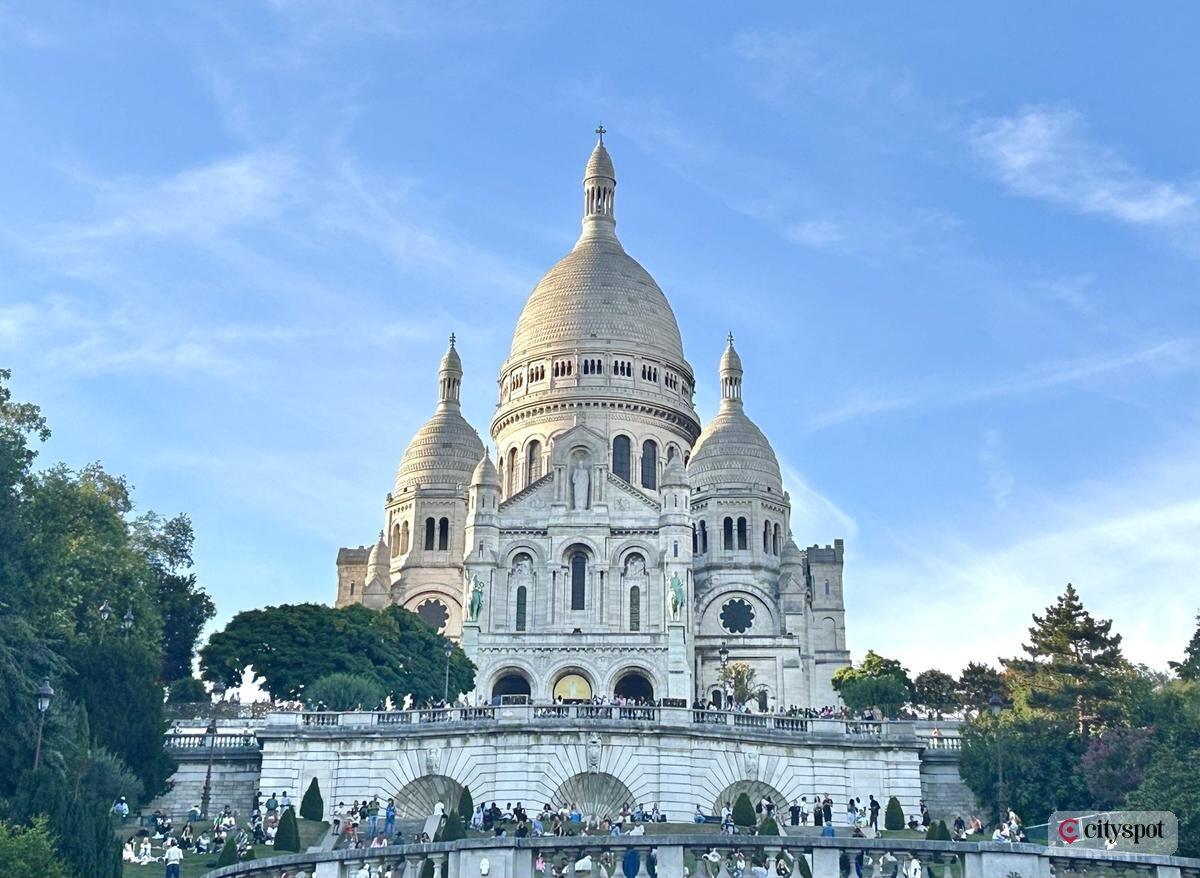
Sacré-Cœur Basilica — Photo: property of CitySpot
Right Bank · 18th arrondissement
Montmartre: The Hilltop Village That Reinvented Modern Art
Once a hilltop village of windmills and gypsum quarries outside the city walls, Montmartre was only annexed by Paris in 1860. Tradition links its name to "Mons Martyrum" — Martyrs' Mount — after Saint Denis was said to have been beheaded here in the 3rd century, then famously picked up his own severed head and walked several miles while preaching a sermon. The Basilica of Sacré-Cœur, begun in 1875 as a national act of penance after the Franco-Prussian War, wasn't consecrated until 1919 — by which point the hill had already become the beating heart of Paris's bohemian art world.
Climb to the Sacré-Cœur today for the best skyline view in the city, wander the Place du Tertre where portrait artists still work outdoors as they have for a century, and visit the Musée de Montmartre, the oldest building on the butte. By night the Moulin Rouge still spins its red sails at the foot of the hill, a holdover from the era when cheap rents here drew an entire generation of painters who would go on to reinvent art itself.
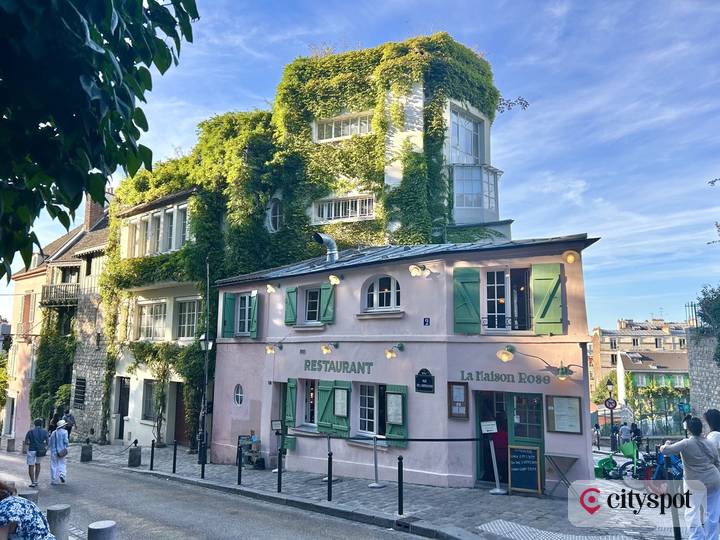
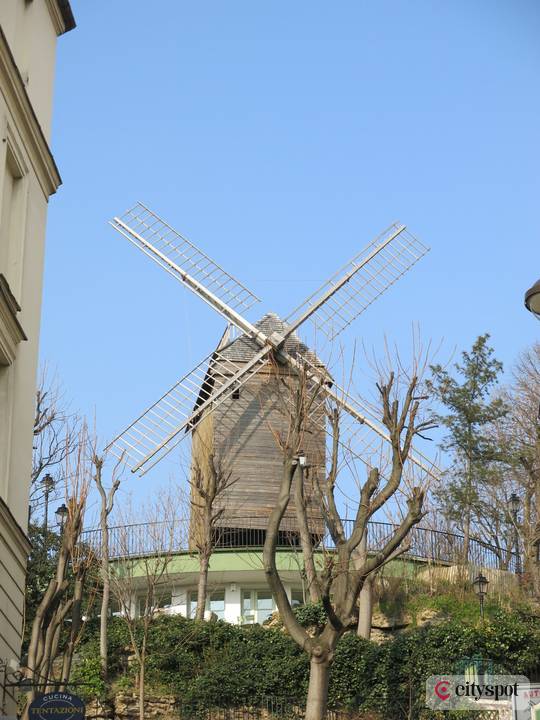
Montmartre's village-like lanes are best climbed on foot. Start on rue Lepic, where the Moulin de la Galette stands at no. 83, continue to Place du Tertre, then follow rue des Saules past Au Lapin Agile and the Clos Montmartre vineyard to rue de l'Abreuvoir and La Maison Rose. Rue Cortot houses the Musée de Montmartre, while the Moulin Rouge glows at 82 boulevard de Clichy.
Picasso shared a ramshackle studio, the Bateau-Lavoir, with the poets Max Jacob and Guillaume Apollinaire, and it was there in 1907 that he painted "Les Demoiselles d'Avignon," a canvas so unsettling that even his own friends thought he had lost his mind. It is now credited with launching Cubism. The building had no running water and a single toilet for the whole studio, and it was nicknamed "the laundry boat" because it creaked in the wind exactly like a boat moored on the Seine.
More from the history books
Montmartre's reputation as a place to drink and dance began with a tax loophole. Until 1860 the village lay outside the city's customs barrier, so wine cost far less here than inside Paris, which is why cabarets and open-air dance halls multiplied on the slopes and why working-class Parisians climbed the hill on Sundays. The same distance from the center helped make it politically explosive: on 18 March 1871, the day the army tried to seize the cannons stored on the butte, the uprising that became the Paris Commune began here.
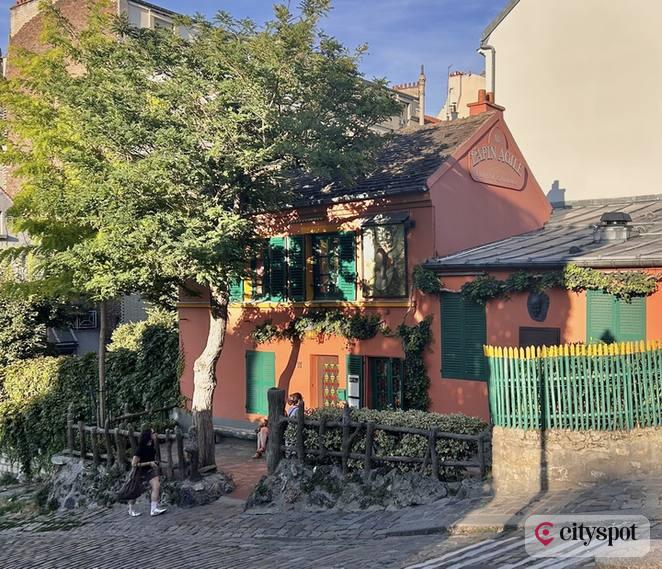
The Moulin Rouge opened in 1889, the same year as the Eiffel Tower, and Henri de Toulouse-Lautrec, who lived in the neighborhood, made its dancers famous through his posters. A few streets away, the Lapin Agile cabaret on rue des Saules still stages evening shows in a building that hosted Picasso and Apollinaire. According to the traditional story, its name comes from a painted sign by the caricaturist André Gill of a rabbit leaping from a saucepan: the "lapin à Gill."
3 key numbers
130 metres — roughly the height of the Montmartre butte above the Seine, the highest natural point in Paris
1919 — the year Sacré-Cœur was finally consecrated, 44 years after construction began
300+ steps climb the Rue Foyatier staircase straight up the hill toward the basilica
We recommend…
- 📍 Sacré-Cœur Basilica — 35 rue du Chevalier-de-la-Barre · Metro: Anvers
- 📍 Place du Tertre — Place du Tertre · Metro: Abbesses
- 📍 Musée de Montmartre — 12 rue Cortot · Metro: Lamarck–Caulaincourt
- 📍 Au Lapin Agile — 22 rue des Saules · Metro: Lamarck–Caulaincourt
- 📍 La Maison Rose — 2 rue de l'Abreuvoir · Metro: Lamarck–Caulaincourt
Did you know?
- Montmartre had working vineyards and windmills well into the 19th century — one surviving vineyard, Clos Montmartre, still produces a small harvest of wine every October.
- Renoir painted "Bal du Moulin de la Galette" just steps from the real open-air dance hall it depicts, which is still standing today.
- Because Montmartre sits on gypsum deposits mined for plaster of Paris, the hill is honeycombed with old quarry tunnels beneath the streets.

Explore Montmartre with CitySpot
Download the CitySpot app and turn your phone into an audio guide to discover 500 points of interest in Paris, as well as many themed walking tours across the city.