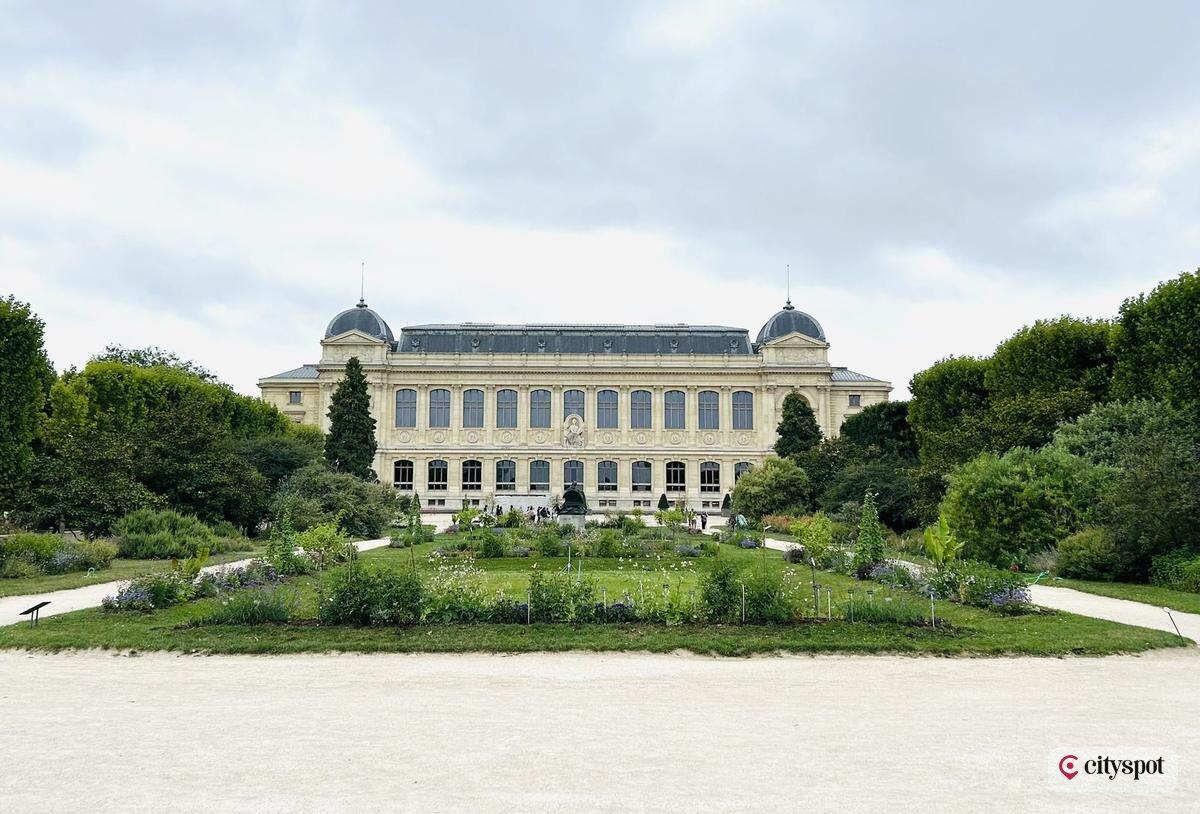
Jardin des Plantes — Photo: property of CitySpot
Left Bank · 5th arrondissement
Latin Quarter: Europe's Student Quarter, Where Everyone Once Spoke Latin
Named for the Latin once spoken by the students and scholars of the University of Paris well into the 18th century, the Latin Quarter is the oldest university quarter in Europe; the Sorbonne was founded here in 1257. Narrow medieval streets survive around rue Mouffetard, one of the city's oldest market streets, largely untouched by Haussmann's 19th-century renovations that reshaped so much of the rest of Paris into wide, uniform boulevards.
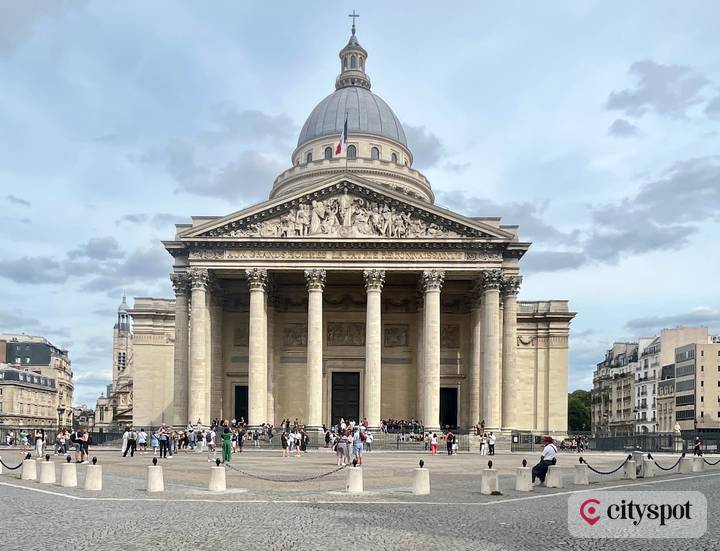
Visit the Panthéon, resting place of Voltaire, Rousseau, Marie Curie, and Victor Hugo; browse Shakespeare and Company, the storied English-language bookshop facing Notre-Dame across the river; and wander the Jardin du Luxembourg at the quarter's southern edge, where students have taken study breaks for centuries. The area still has a scrappy, youthful energy, with cheap crêperies, late-opening bookshops, and student bars tucked into buildings that have stood since the Middle Ages.
Climb rue Saint-Jacques, which follows the line of an old Roman road, to the Panthéon on Place du Panthéon, wander down rue Mouffetard for its market and cafés, and cross rue des Écoles to the Sorbonne at no. 47. Down by the Seine, Shakespeare and Company waits at 37 rue de la Bûcherie.
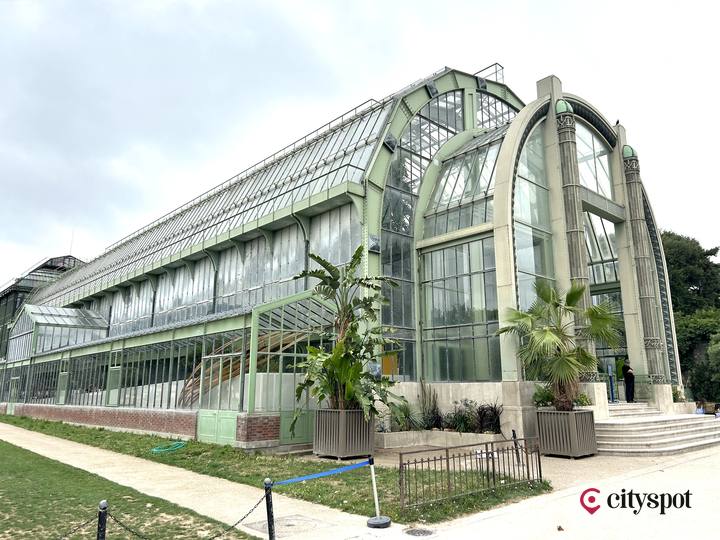
At the quarter's south-eastern edge, the Jardin des Plantes was founded in 1626 as the royal garden of medicinal plants and opened to the public in 1640. It is now both a botanical garden and a museum complex, with the Grande Galerie de l'Évolution, a menagerie founded in 1794 that is among the oldest zoos in the world, and glasshouses where tropical plants grow beneath glass and iron. It makes a calm counterpoint to the bustle of rue Mouffetard.
In the medieval university, students answered to Church courts rather than royal ones, a privilege that occasionally let them get away with real mayhem in the surrounding streets, from brawling to outright rioting, since the king's own police had no authority to arrest them. Centuries later, Ernest Hemingway lived nearby and wrote for hours in the quarter's cafés in the 1920s, later chronicled in "A Moveable Feast."
More from the history books
Long before the Sorbonne, this slope of the Left Bank was the heart of Roman Lutetia. The Arènes de Lutèce, an amphitheater built in the 1st century that could hold around 15,000 spectators, was rediscovered in the 1860s during construction work on rue Monge and was nearly lost for good; writers including Victor Hugo campaigned to save it, and today locals play pétanque and football where gladiators once fought. A few streets away, the Roman baths at Cluny survive as part of the Musée de Cluny.
The quarter's student reputation was cemented in the 13th century, when Robert de Sorbon founded a college for poor theology students that grew into the Sorbonne. Centuries later, in May 1968, student barricades rose on rue Gay-Lussac and the surrounding streets in the protests that shook France, bringing the quarter back to the center of national history.
3 key numbers
1257 — the year the Sorbonne was founded, making this Europe's oldest university quarter
70+ "great men" (and a handful of women) rest inside the Panthéon's crypt
1 street — rue Mouffetard — has been a market street continuously for over 2,000 years, since Roman times
We recommend…
- 📍 Panthéon — Place du Panthéon · Metro: Cardinal Lemoine
- 📍 Musée de Cluny — 28 rue du Sommerard · Metro: Cluny–La Sorbonne
- 📍 Shakespeare and Company — 37 rue de la Bûcherie · Metro: Saint-Michel
- 📍 Arènes de Lutèce — 49 rue Monge · Metro: Place Monge
- 📍 Église Saint-Étienne-du-Mont — 1 place Sainte-Geneviève · Metro: Cardinal Lemoine
Did you know?
- The name "Quartier Latin" has nothing to do with Roman ruins — it comes from Latin being the common academic language spoken in its streets until the French Revolution.
- Rue Mouffetard follows the exact route of a Roman road running south out of the city, making it one of the oldest continuously used streets in Paris.
- Shakespeare and Company has let struggling writers sleep among its shelves for free since the 1950s, in exchange for reading a book a day and helping around the shop.

Explore the Latin Quarter & the Jardin des Plantes with CitySpot
Download the CitySpot app and turn your phone into an audio guide to discover 500 points of interest in Paris, as well as many themed walking tours across the city.