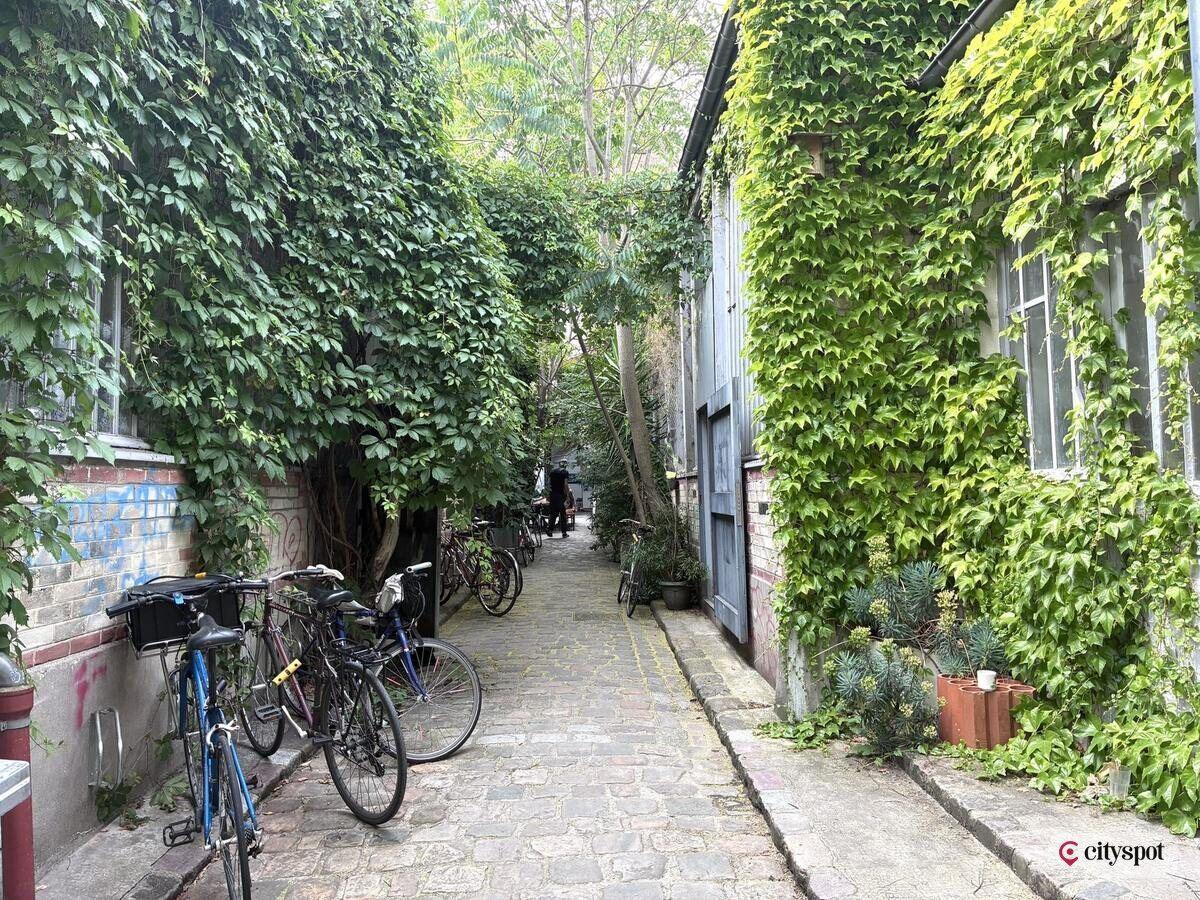
A hidden ivy-covered lane in Belleville — Photo: property of CitySpot
Right Bank · 19th & 20th arrondissements
Belleville & Ménilmontant: The Hilltop Village Paris Annexed in 1860
An independent hilltop village until its annexation by Paris in 1860, Belleville was long the city's working-class and immigrant quarter, home over successive generations to Jewish, Armenian, North African, and Chinese communities who still shape its markets and restaurants today. Unlike the postcard neighborhoods further west, Belleville has never fully gentrified into something unrecognizable; it still feels lived-in rather than curated.
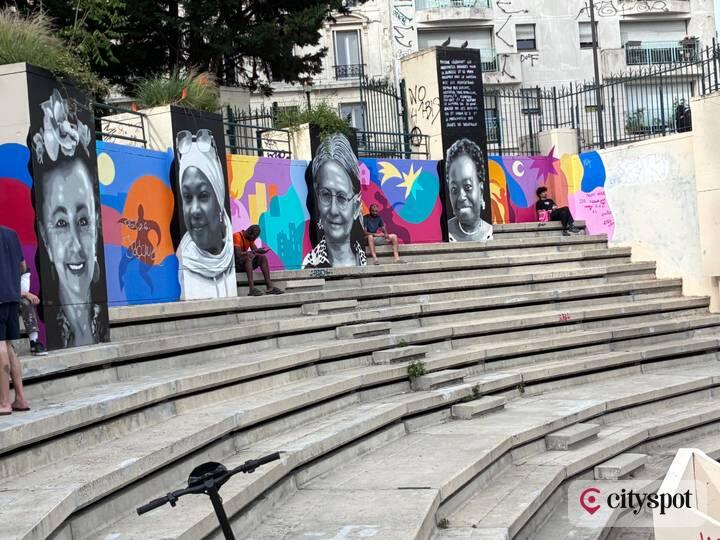
Climb to the Parc de Belleville for one of the best skyline views in the city, arguably better than Montmartre's and with a fraction of the crowds. Then explore the neighborhood's street art and small artists' studios, and eat your way through its Vietnamese, North African, and Chinese restaurants. The steep, stepped streets make Belleville one of the few Paris neighborhoods where the walk itself feels like part of the attraction.
Rue de Belleville is the neighborhood's long main artery, lined with Asian restaurants and bakeries. Rue Dénoyez is its street-art alley, the Parc de Belleville is at 47 rue des Couronnes, and rue de Ménilmontant runs down toward the Père-Lachaise cemetery at 16 rue du Repos.
According to neighborhood legend, Édith Piaf was born on the steps of 72 rue de Belleville in 1915, and a plaque marks the spot today. Hospital records suggest she was more likely born at the nearby Hôpital Tenon; the street-birth story grew into myth later, fitting her image as a true child of the Paris streets. The neighborhood's village-like staircases still feel closer to old Montmartre than to the grand boulevards of central Paris.
More from the history books
Before it was Paris, Belleville was a hillside of vineyards and market gardens outside the customs wall, which made it the place to go for cheap wine. Working-class Parisians crossed the barrier to drink in its guinguettes, open-air taverns and dance halls where wine was sold without the city's tax, and the lively, slightly rebellious reputation of the hills of Belleville and Ménilmontant dates from those years.
That rebellious reputation had a tragic coda. In the last days of the Paris Commune, in May 1871, the final barricades fell in this part of the city; the last stand is traditionally placed on rue Ramponeau in Belleville on 28 May 1871. Just south, along the wall of Père-Lachaise cemetery, around a hundred and fifty Communard prisoners were shot the same week at what is now known as the Mur des Fédérés, still a place of pilgrimage for the French left.
3 key numbers
128 metres — the summit of Parc de Belleville, one of the highest viewpoints in Paris
1860 — the year Belleville and Ménilmontant were annexed into the city of Paris
20+ languages are said to be spoken daily on and around Belleville's main market street
We recommend…
- 📍 Parc de Belleville — 47 rue des Couronnes · Metro: Couronnes
- 📍 Rue Dénoyez — Rue Dénoyez · Metro: Belleville
- 📍 Père-Lachaise Cemetery — 16 rue du Repos · Metro: Père Lachaise
- 📍 La Bellevilloise — 19–21 rue Boyer · Metro: Gambetta
Did you know?
- Belleville was home to one of Europe's largest Chinese communities outside Asia by the late 20th century, visible today in its markets along rue de Belleville.
- The hill of Belleville is the highest natural point in eastern Paris, just slightly lower than Montmartre on the opposite side of the city.
- Many of Belleville's steep staircase-streets ("rues en escalier") were never designed for cars — they're among the last genuinely pedestrian-only streets from before the automobile era.

Explore Belleville & Ménilmontant with CitySpot
Download the CitySpot app and turn your phone into an audio guide to discover 500 points of interest in Paris, as well as many themed walking tours across the city.