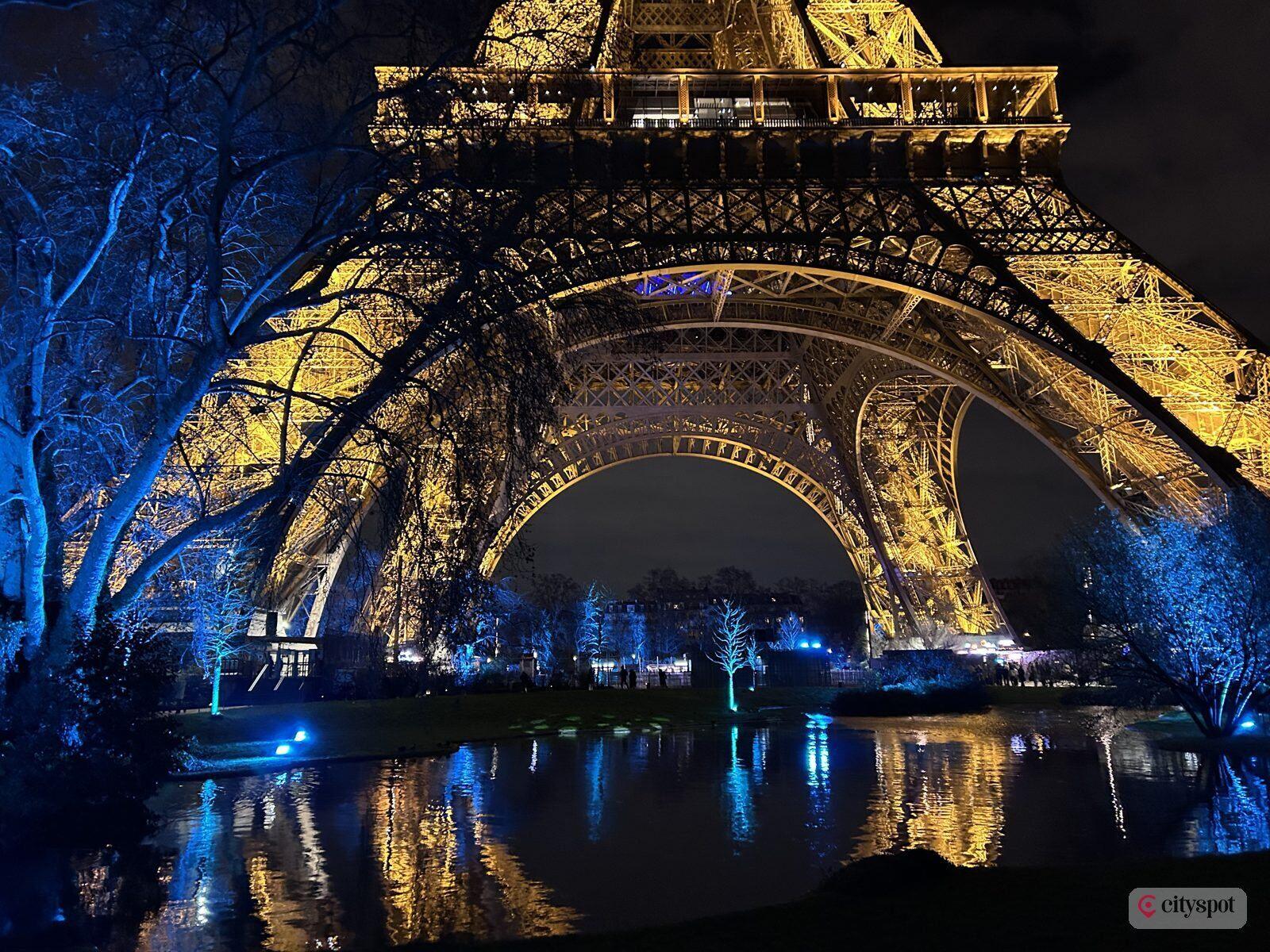
The Eiffel Tower — Photo: property of CitySpot
Left Bank · 7th arrondissement
Eiffel Tower & Invalides: The "Temporary" Tower That Never Left
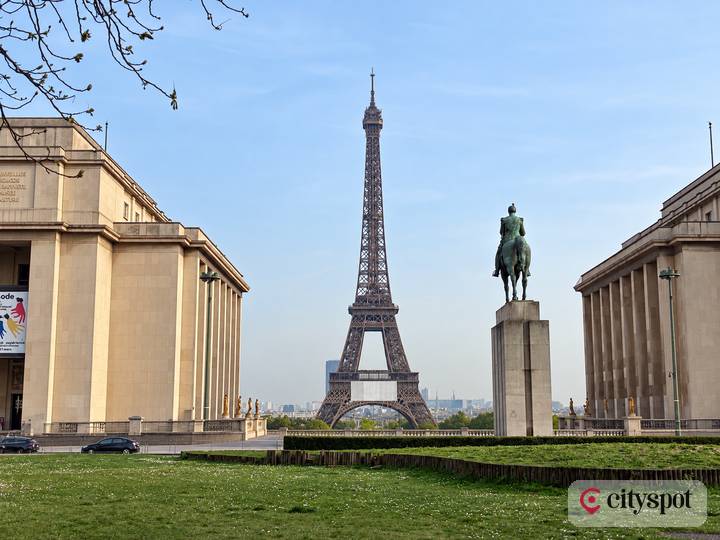
Built for the 1889 Exposition Universelle as a temporary centerpiece and nearly demolished in 1909 once its 20-year permit expired, the Eiffel Tower survived thanks to its usefulness as a radio antenna, a last-minute reprieve for what critics at the time called an iron monstrosity. Nearby, Les Invalides was commissioned by Louis XIV in 1670 as a hospital and retirement home for wounded soldiers; its golden dome has held Napoleon's tomb since 1861, his remains returned from exile on Saint Helena two decades earlier.
Visit the tower's summit (book well ahead, especially in summer), picnic on the Champ de Mars lawns beneath it, and tour the Musée de l'Armée and Napoleon's tomb at the Invalides, where his body rests inside six nested coffins. Few neighborhoods in Paris pack this much pure symbolism, military glory and iron-age engineering, into a single, easily walkable stretch along the Seine.
The Eiffel Tower stands at the end of the Champ de Mars, at 5 avenue Anatole France. Walk inland along rue Cler, one of the liveliest market streets in Paris, then follow rue de Grenelle to Les Invalides at no. 129 and rue de Varenne to the Musée Rodin at no. 77. Along the river, the Musée du quai Branly stands on quai Branly, and across the Seine the Place du Trocadéro offers the classic photo of the tower.
During the Nazi occupation, Parisians are said to have cut the tower's elevator cables so that Hitler would have to climb all 1,710 steps to reach the top; he never did, viewing Paris from the Trocadéro instead. Gustave Eiffel, for his part, kept a private apartment near the summit of his tower, furnished for entertaining, where he reportedly hosted Thomas Edison for an evening in 1889.
More from the history books
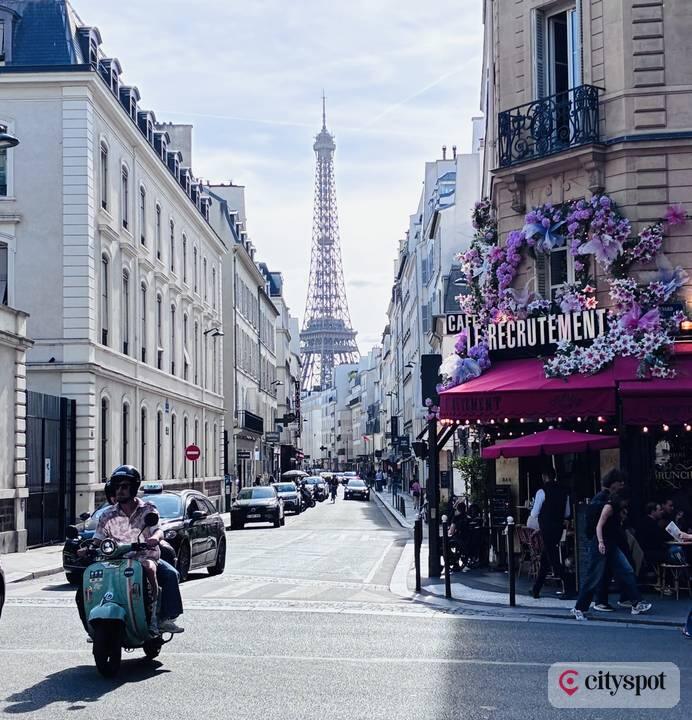
The tower had enemies from the start. In February 1887, as construction was about to begin, a group of prominent artists and writers — among them the composer Charles Gounod, the Opéra architect Charles Garnier and the writer Alexandre Dumas fils — published an open letter denouncing the planned "useless and monstrous" tower in the pages of Le Temps. Legend adds that Guy de Maupassant, one of its fiercest critics, often ate lunch at its restaurant because it was the one place in Paris from which he couldn't see it.
The district has a second claim to history that predates the tower by a century. On the morning of 14 July 1789, crowds seeking weapons broke into the Hôtel des Invalides and carried off tens of thousands of muskets stored in its cellars, and only then marched on the Bastille, which they hoped would hold the gunpowder. A year later, on 14 July 1790, hundreds of thousands gathered on the Champ de Mars, where the tower now stands, for the Fête de la Fédération celebrating the Revolution's first anniversary.
3 key numbers
330 metres tall (with antennas) — the Eiffel Tower was the tallest structure in the world for 41 years, until 1930
18,038 metal parts and roughly 2.5 million rivets hold the tower together
6 nested coffins — of iron, mahogany, lead (×2), ebony, and oak — contain Napoleon's remains beneath the Invalides dome
We recommend…
- 📍 Eiffel Tower — 5 avenue Anatole-France · Metro: Bir-Hakeim
- 📍 Les Invalides — 129 rue de Grenelle · Metro: Varenne
- 📍 Musée Rodin — 77 rue de Varenne · Metro: Varenne
- 📍 Rue Cler market street — Rue Cler · Metro: École Militaire
- 📍 Place du Trocadéro — Place du Trocadéro · Metro: Trocadéro
Did you know?
- The tower grows about 15 centimetres taller in summer as its iron expands in the heat — and leans slightly away from the sun.
- It has been repainted in a different color every few decades; today's bronze shade uses three subtly different tones, lighter at the top to match the Paris sky.
- The name "Invalides" is literal: Louis XIV built it specifically to house soldiers disabled in his wars, at a time when wounded veterans were otherwise left to beg in the streets.

Explore the Eiffel Tower & Invalides area with CitySpot
Download the CitySpot app and turn your phone into an audio guide to discover 500 points of interest in Paris, as well as many themed walking tours across the city.