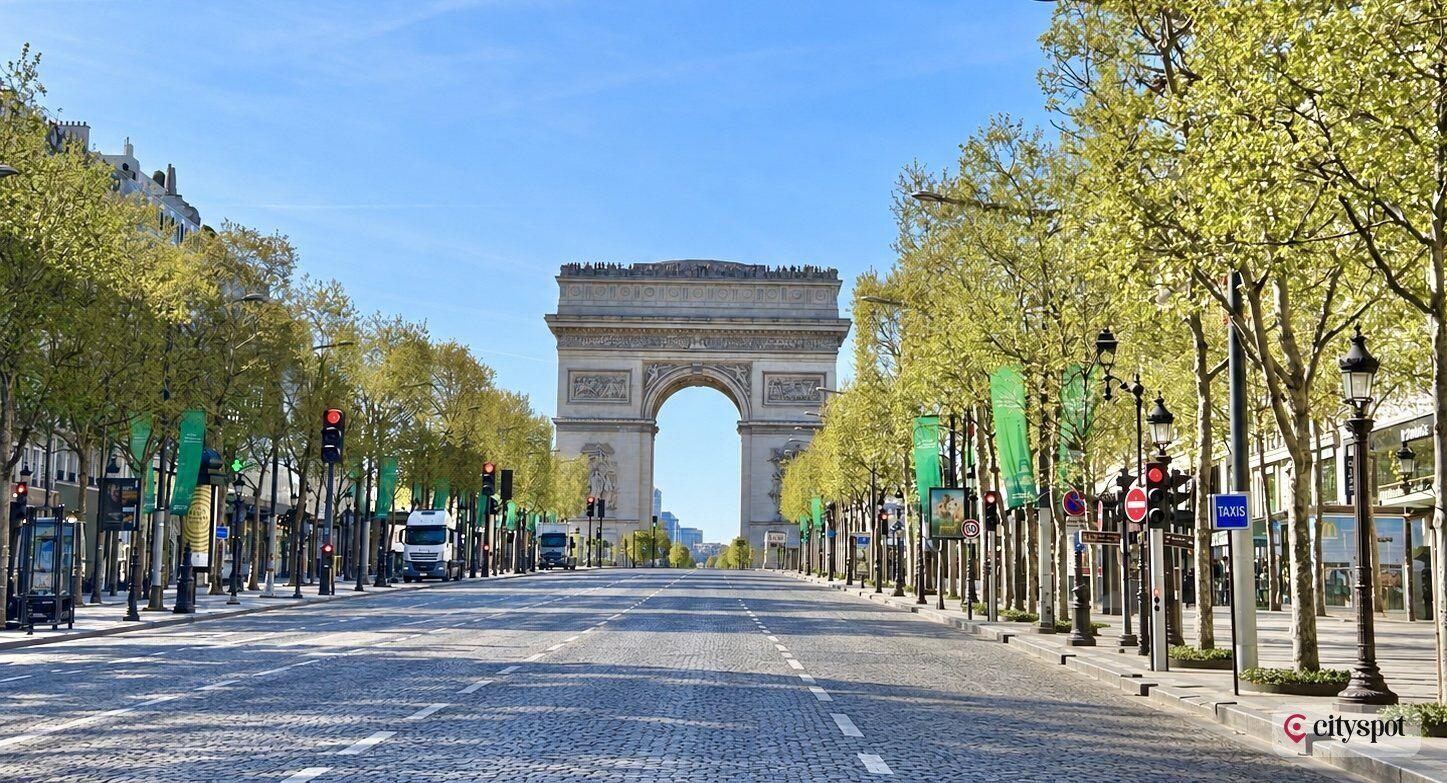
Avenue des Champs-Élysées — Photo: property of CitySpot
Right Bank · 8th arrondissement
Champs-Élysées & Triangle d'Or: From Market Gardens to the World's Grandest Avenue
Once fields and market gardens, the Champs-Élysées was laid out as a formal promenade in the 1660s by André Le Nôtre, Louis XIV's landscape architect, and extended toward the Arc de Triomphe, commissioned by Napoleon in 1806, over the following century. The "Triangle d'Or," between the avenue, avenue Montaigne and avenue George V, grew into Paris's couture and luxury quarter over the 20th century, and remains the address every major maison wants on its label.
Walk the avenue from Place de la Concorde to the Arc de Triomphe, climb the arch for a rooftop view down twelve converging avenues laid out in a star pattern, and window-shop the flagship maisons of avenue Montaigne. It is one of the few streets in Paris built deliberately for spectacle, wide, straight and designed from the start to impress, which is exactly why it has hosted the city's biggest parades and celebrations for over two centuries.
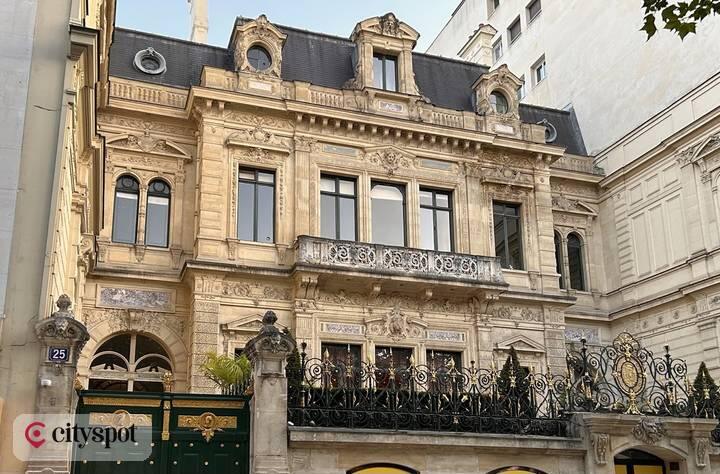
The avenue itself runs about 1.9 km from Place de la Concorde to the Arc de Triomphe, but the Triangle d'Or is worth a detour: avenue Montaigne is home to Dior at no. 30, and rue du Faubourg Saint-Honoré passes the Élysée Palace at no. 55. Near the river, the Grand Palais and the Petit Palais face each other across avenue Winston-Churchill, and the Hôtel de la Païva stands at 25 avenue des Champs-Élysées.
General Charles de Gaulle led the liberation parade down the avenue in August 1944, walking in the open despite the real risk of German snipers still hiding on the rooftops, one of the most photographed and dangerous moments in the city's modern history. The avenue has been a stage for French triumph and defiance ever since, from World Cup celebrations to New Year's Eve crowds a million strong.
More from the history books
The avenue takes its name from Greek mythology: the Elysian Fields, the paradise of the blessed dead. Le Nôtre's original axis ended at what is now the Rond-Point, and only in 1724 was the avenue pushed further up to the heights of Chaillot, where the Arc de Triomphe would eventually be built. In 1828 the city took over the avenue and fitted it with gas lighting, turning what had been a dark, rather risky promenade into a place to be seen after dark.
The 1900 Exposition Universelle left the district two lasting monuments, the Grand Palais and the Petit Palais, both built for the fair and both still standing, along with the ornate Pont Alexandre III that links the avenue to Les Invalides. The Triangle d'Or's fashion reputation grew later: Christian Dior opened his couture house on avenue Montaigne in 1946, and it is still there today, long since joined by the other great names of couture.
3 key numbers
12 avenues converge in a star pattern at the Arc de Triomphe, giving the square its old name, Place de l'Étoile
1806 — the year Napoleon commissioned the Arc de Triomphe; it wasn't finished until 1836
1975 — the first year the Tour de France finished on the Champs-Élysées, a tradition unbroken since
We recommend…
- 📍 Arc de Triomphe — Place Charles-de-Gaulle · Metro: Charles de Gaulle–Étoile
- 📍 Hôtel de la Païva — 25 avenue des Champs-Élysées · Metro: Franklin D. Roosevelt
- 📍 Petit Palais — Avenue Winston-Churchill · Metro: Champs-Élysées–Clemenceau
- 📍 Place de la Concorde — Place de la Concorde · Metro: Concorde
- 📍 Tuileries Garden — Rue de Rivoli · Metro: Tuileries
Did you know?
- The Champs-Élysées is nicknamed "la plus belle avenue du monde" — the most beautiful avenue in the world — a title Parisians still defend without much irony.
- The avenue's rows of horse-chestnut trees were first planted in the 1700s and have been replanted several times since, always in the same formal double rows.
- Avenue Montaigne, part of the Triangle d'Or, is named after a 16th-century philosopher who never set foot anywhere near this stretch of road; it was renamed in his honor only in 1850.

Explore Champs-Élysées & Triangle d'Or with CitySpot
Download the CitySpot app and turn your phone into an audio guide to discover 500 points of interest in Paris, as well as many themed walking tours across the city.