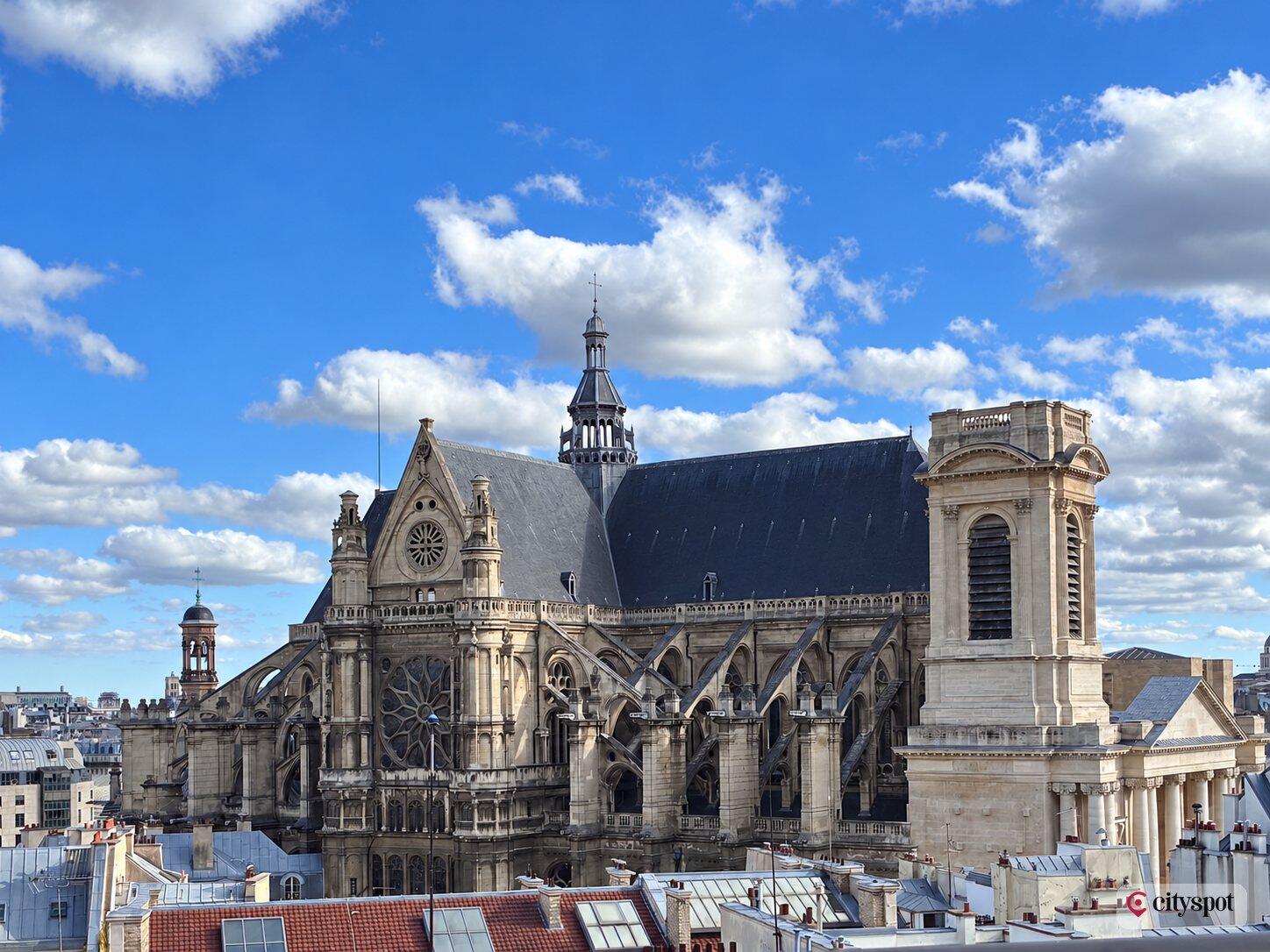
Saint-Eustache Church — Photo: property of CitySpot
Right Bank · 1st & 2nd arrondissements
Les Halles & Montorgueil: 800 Years as the Belly of Paris
Les Halles dates to 1183, when King Philip II Augustus had covered halls built to shelter the merchants who had until then sold in the open air on this marshy site. It was the start of an eight-century relationship between this place and the city's food. For more than 800 years, Les Halles was “the belly of Paris”, the capital's central wholesale market. It was rebuilt in the 1850s beneath Victor Baltard's glass-and-iron pavilions, a radical structure for its time.
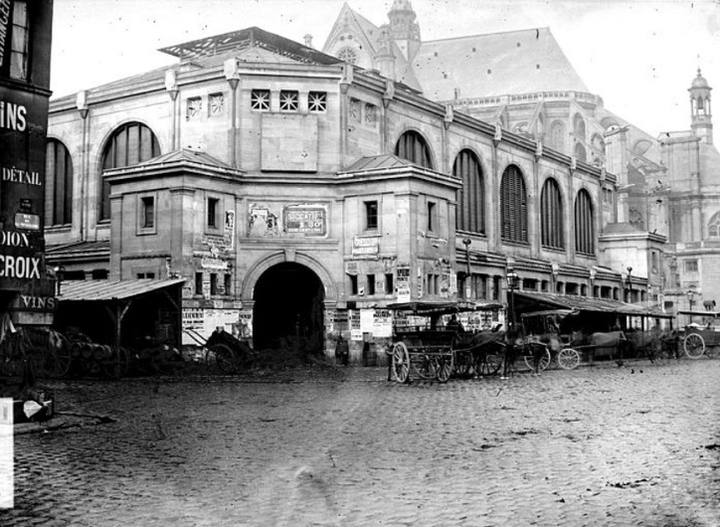
The market was demolished in 1971, not without controversy, and moved to Rungis, outside the city. The site became the Forum des Halles, a sunken shopping center, rebuilt again beneath a vast glass canopy completed in 2016 after years of construction. The demolition is still mourned by Parisian heritage defenders as one of the city's great architectural losses: only one of the original pavilions survives, moved to a suburban town.
Next to the market lay the largest cemetery in Paris, the Cimetière des Saints-Innocents. By the 1780s it was so overcrowded that residents complained of the smell. Its bones were then transferred, over several years, to the former quarries that became the catacombs.
Émile Zola set Le Ventre de Paris (The Belly of Paris) in the old market, describing its chaos, noise and smells in almost dizzying detail: whole pages are devoted to the smell of cheese alone.
Traces of the past
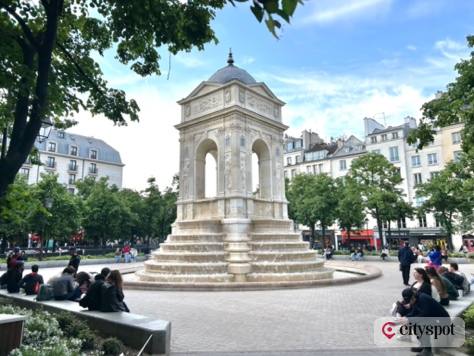
The Fontaine des Innocents, built in 1549 and partly sculpted by Jean Goujon, is the oldest Renaissance fountain in Paris. It was moved to its present square when the cemetery was cleared.
The church of Saint-Eustache, where Molière was baptized and where the young Louis XIV took his first communion, combines a Gothic framework with Renaissance decoration. Against all odds, it survived centuries of upheaval right beside the chaos of the market.
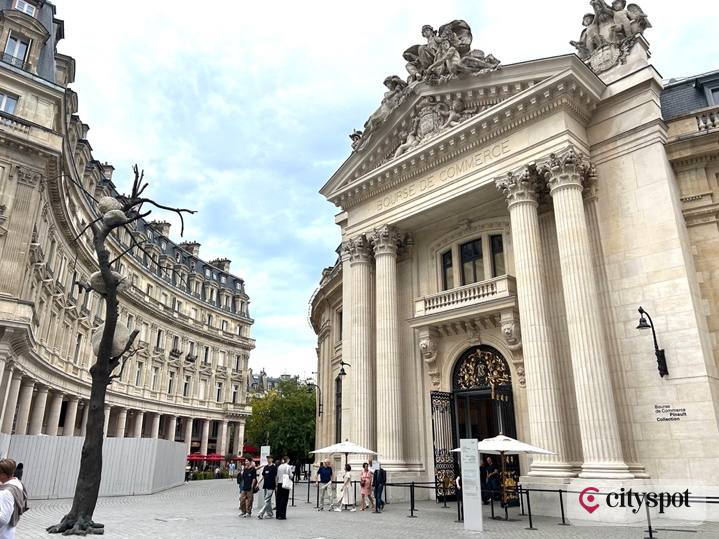
The Bourse de Commerce, circular and formerly a grain exchange, reopened in 2021 as a contemporary art museum for the Pinault Collection, a reminder that the site has been reinventing itself for centuries.
What to see and do today
Stroll along rue Montorgueil, one of the great market streets of Paris. This pedestrian shopping street is still lined with cheesemongers, bakeries, oyster bars and other food shops that carry on the spirit of the old market, even though the wholesale halls disappeared long ago. Don't miss the pastry shop Stohrer, at no. 51, which dates from 1730.
Several routes lead off from here:
- rue de la Ferronnerie, where Henri IV was assassinated in 1610, runs alongside the Fontaine des Innocents;
- rue de Viarmes leads to the Bourse de Commerce, at no. 2;
- for shopping, head to rue Étienne-Marcel and rue Tiquetonne.
3 key numbers
800+ years Les Halles served as Paris's central food market before its 1971 demolition
2016 — the year the current glass canopy over Forum des Halles was finally completed
105 metres long, Église Saint-Eustache is one of the largest churches in Paris, built over more than a century
We recommend…
- 📍 Église Saint-Eustache — 2 impasse Saint-Eustache · Metro: Les Halles
- 📍 Fontaine des Innocents — Place Joseph-Passy · Metro: Les Halles
- 📍 Bourse de Commerce – Pinault Collection — 2 rue de Viarmes · Metro: Les Halles
- 📍 Stohrer pastry shop — 51 rue Montorgueil · Metro: Étienne Marcel
Did you know?
- The surviving Baltard pavilion was dismantled piece by piece and rebuilt in Nogent-sur-Marne, just outside Paris, where it still stands today as an event venue.
- Rue Montorgueil's name comes from "Mont Orgueilleux" — proud hill — a nod to a modest rise in the street that once marked the approach to the market.
- Église Saint-Eustache took 105 years to build, spanning the reigns of several kings, which is why its architecture mixes Gothic structure with Renaissance ornamentation.

Explore Les Halles & Montorgueil with CitySpot
Download the CitySpot app and turn your phone into an audio guide to discover 500 points of interest in Paris, as well as many themed walking tours across the city.